Friday night started at the video store. Not at the couch, not at the door, not even in the car — it started the moment you walked through those glass doors into that particular cold, fluorescent hum and the smell of carpet and popcorn and plastic clamshell cases, and the whole weekend suddenly hung in the balance of what you could find on those shelves. There was a ritual to it that streaming has quietly erased, and I did not understand how much I loved that ritual until the last store in my town went dark and became, of all things, a phone repair shop. You do not rewind a phone repair shop. There is nothing to be kind about.
The video store was a place you went to be patient, though nobody called it that at the time. You walked the aisles slowly. You read the backs of the boxes, the whole back, the plot summary and the pull-quote from a critic at a newspaper you had never heard of and the little grid of tiny scene photographs that promised more excitement than the movie could possibly deliver. You picked a box up, and you weighed it in your hand, and you put it back. You negotiated. If you were there with a sibling, the negotiation could last longer than the movie itself, a whole diplomatic summit conducted in the horror aisle, treaties proposed and rejected, alliances formed and betrayed, all of it hinging on whether the thing you wanted was even there, because there was exactly one copy, and someone else in town might already have it.
That was the part the algorithms cannot reproduce: the scarcity. When the new release wall had an empty slot where the movie you wanted should have been, that was it. It was gone. Someone got there first, and now you had to want something else, had to stand there and let your second choice become your first choice, had to make peace with the film you had not planned on and discover, half the time, that it was better than the one you came for. There is no empty slot in the streaming age. Everything is always available, all of it, all at once, an infinite wall that never runs out and therefore never asks you to choose. And when nothing is scarce, nothing is precious, and you can scroll for forty-five minutes and go to bed having watched nothing at all, which is a thing that literally could not happen in 1991. In 1991 you had the tape. You had already paid the two dollars. You were going to watch the tape.
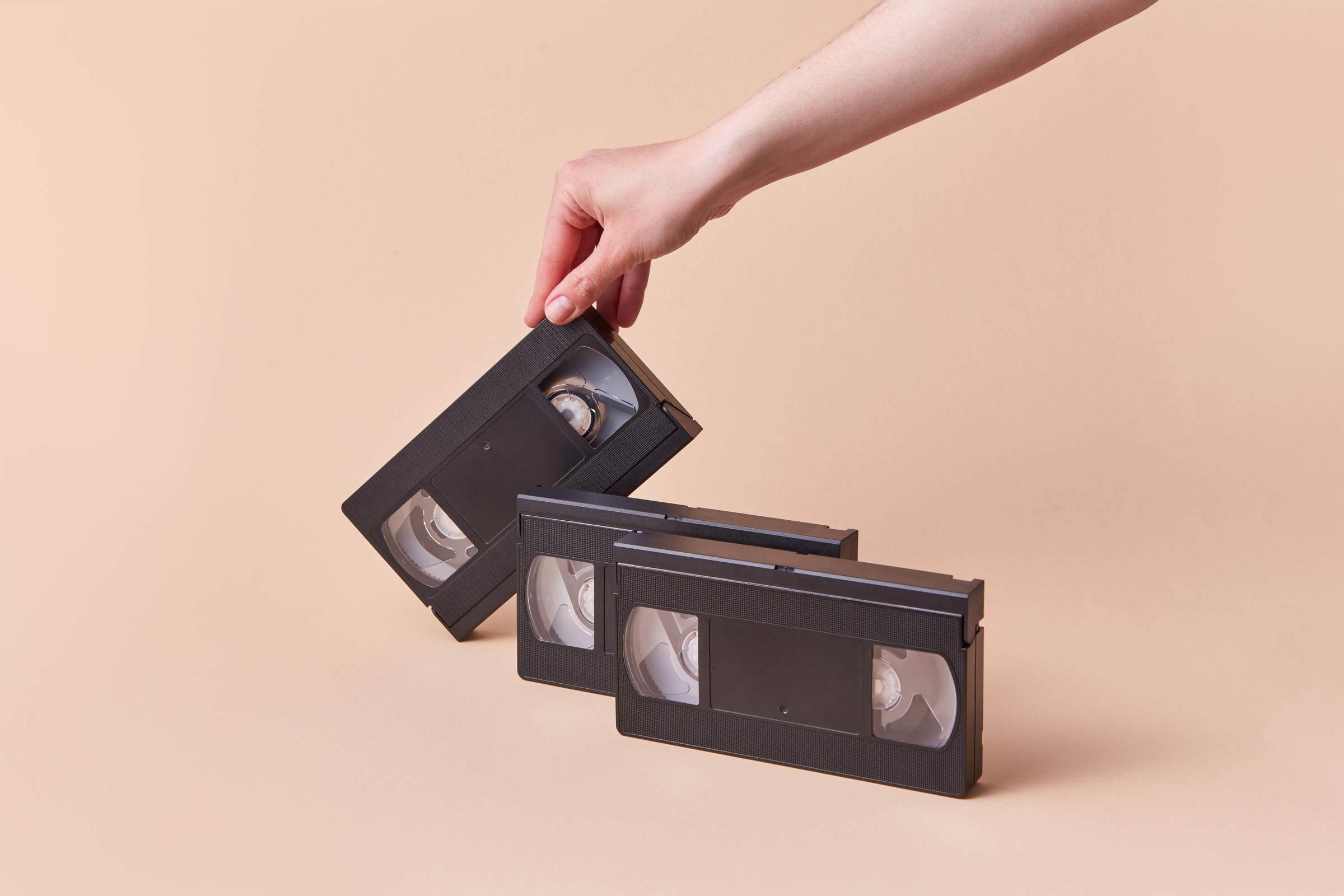
And then there was the rewinding. Be kind, please rewind. It was printed on a little sticker on the cassette itself, and it was printed on the case, and it was, when you think about it, an entire moral philosophy compressed onto a strip of adhesive paper. Be kind. Please rewind. The person after you cannot start where you started unless you take the time, now, to send the tape back to the beginning. It was a small act of consideration for a stranger you would never meet, a person whose Friday night depended on the discipline of your Tuesday return. If you did not rewind, they knew. The tape would start in the middle, and they would sit there in the dark holding the remote, thumbing it backward, thinking unkind thoughts about the anonymous savage who had come before them. Patience was not a virtue back then. It was the operating system. It was the water you swam in.
Everything asked you to wait. You waited for the tape to rewind, the little machine whirring and clicking, the counter spinning backward, and you could not skip it, could not fast-forward the rewind, could only sit there and let the mechanism do the physical work of moving film from one spool to another. You waited for the movie to come out on video in the first place, months after it left the theater, an eternity in kid-time. You waited for your show to come on at its appointed hour, and if you missed it, you missed it, unless you had the foresight and the technical courage to program the VCR, which nobody’s parents could reliably do. Waiting was not dead time. Waiting was the shape of anticipation, and anticipation, it turns out, is most of the pleasure. The wanting was the good part. We have optimized the wanting right out of our lives, and we are somehow less satisfied for it.
I do not want the late fees back. Let me be clear about that. The late fee was a genuine injustice, a small tax on human forgetfulness, and I have not missed the specific dread of finding a rented tape under the car seat two weeks after it was due. But I miss what the late fee implied, which was that you had made a commitment. You took the thing home, and it was yours for a night, and then it belonged to someone else, and that borrowed quality made you value it. A movie you have to return by tomorrow is a movie you actually watch. A movie that lives forever in a menu is a movie you will get to eventually, which means never.
So this is a small argument for scarcity, for the empty slot on the wall, for the one copy that someone else might take. It is an argument for finishing the tape you already rented instead of scrolling past ten thousand you never will. And it is, most of all, an argument for the sticker. Be kind, please rewind. Take the extra minute. Do the small, invisible work of leaving a thing better than you found it for the next person in line, even a person you will never meet, especially a person you will never meet. The video store is gone, and I am not naive enough to think it is coming back. But the philosophy on that sticker never expired. We could all still stand to be a little kinder, and to remember that patience was never a punishment. It was just how we lived, and we were, in our slow and waiting way, content.