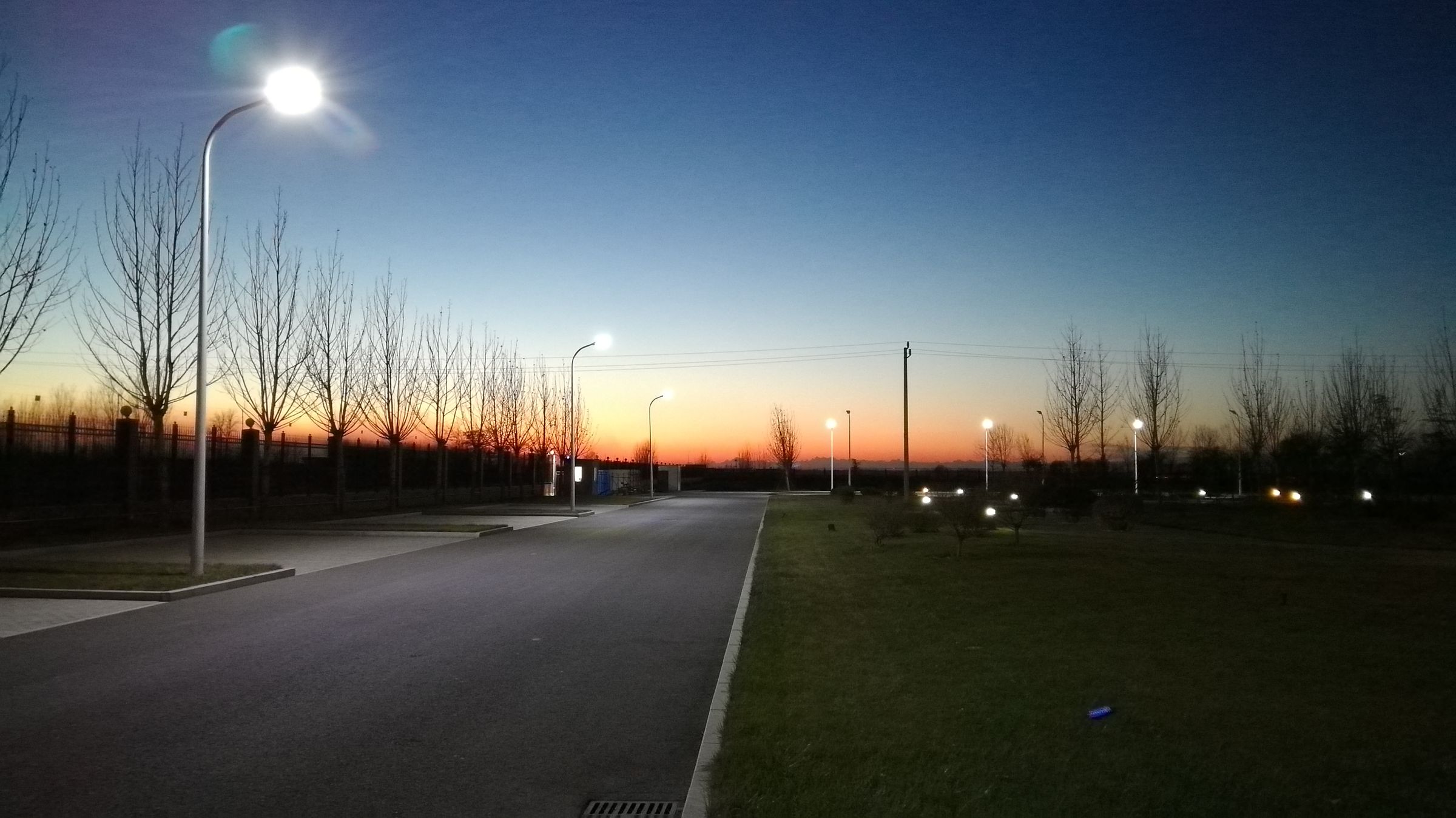
The rule was simple, and every kid in the neighborhood understood it without ever having to be told twice: be home when the streetlights come on. That was the whole contract. Not a specific time, because half of us could not have told you the specific time, and it did not matter anyway. The clock was the sky. When the light drained out of the day and the tall lamps along the street buzzed and flickered and then held steady with that particular orange-pink glow, the day was over, and you were expected at the table, and everyone knew it. No texts. No location sharing. No parent tracking a small blue dot across a map of the county to confirm you were where you said you would be. Just a whole afternoon of being completely unreachable and completely fine.
I want to sit with that phrase for a minute, because I think it is the whole thing: unreachable and fine. Those two words do not go together anymore. We have built an entire world on the premise that to be unreachable is to be in danger, that a person who cannot be contacted at any instant is a person something has gone wrong with. And so we are never unreachable, none of us, not the kids and not the adults, and we have mistaken that constant tether for safety when a lot of the time it is just noise. We did not call it unplugging back then, because there was nothing to unplug from. We just called it going outside. You went outside, and the outside did not have your name and did not know where you were, and that was not neglect. That was childhood.
What did we do out there, unreachable, until the lights came on? Honestly, most of the time, nothing. We did an enormous amount of nothing. We stood around. We rode bikes to no destination and then rode them back. We invented games with rules so elaborate and so specific to that one afternoon that they could never be played again and were forgotten by dinner. We were bored, gloriously and productively bored, the kind of boredom that has been almost entirely eliminated from modern life and that turns out to have been the compost that everything else grew out of. When there is nothing to do and no screen to do it on, you are forced to become interesting to yourself. You make things up. You notice things. You get into small manageable trouble and you get yourself back out of it, and nobody ever knows, and that is how you learn that you are a person who can handle things.
That is the word I keep circling back to: autonomy. The streetlight curfew was, without any of us knowing it, a daily lesson in autonomy. For those hours between the end of school and the coming-on of the lights, you were the sole authority over your own life. No adult was watching. No device was recording. You made every decision — where to go, who to go with, how far was too far, when the dare had gone from fun to genuinely stupid — and you lived with the consequences, and you were home in time or you were not, and being home in time was the one non-negotiable term of a contract that otherwise trusted you completely. We were handed real responsibility in small, survivable doses, and we grew up into it. I am not sure we do that anymore. I am not sure the modern childhood, for all its safety and all its enrichment, leaves quite enough room for a kid to be the boss of a single unsupervised hour.
I know how this sounds. I know that every generation believes it invented resilience and that the kids today have it soft, and I am trying very hard not to be that guy, the one shaking a fist at a phone. The world changed for real reasons, some of them good, most of them understandable. The impulse to keep a child reachable and trackable comes from love, and I would never argue with love. But I think we can hold two things at once. We can be grateful for the safety and still mourn, a little, what the constant connection quietly took: the practice of being alone with yourself, the muscle of unstructured time, the specific confidence that comes from having navigated an entire evening with no adult and no device and having made it home under your own power.
Because that is what the streetlight really taught. It was not about the light. It was about the fact that the world could hold you loosely for a few hours and then gather you back in, and that in the loose part, the untracked part, you became someone. You found out what you liked when nobody was assigning it. You found out who your real friends were when there was no group chat organizing the friendship. You found out you could be bored to the edge of madness and then invent your way out of it, which is, if you think about it, the entire creative act in miniature, practiced daily on a suburban lawn.
So this is a small argument for unreachability. For putting the phone in a drawer for an hour and letting the world not know exactly where you are. For giving a kid, or giving yourself, a stretch of time that nobody is monitoring and nobody is optimizing and nobody can interrupt. The streetlights still come on every evening, all over the country, that same orange glow flooding the same empty streets, and there is nobody under them now. Everyone is inside, reachable, tracked, safe, and a little bit lonely in a way we have not quite named yet. I am not saying send the kids back out into the dark. I am saying we lost something real when the curfew went digital, and it is worth remembering what it was. We were unreachable, once, and we were fine. Better than fine. We were free.